
News & updates
Latest developments from our institute
Stay informed about new research results, awards, events, and collaborations across our scientific community.
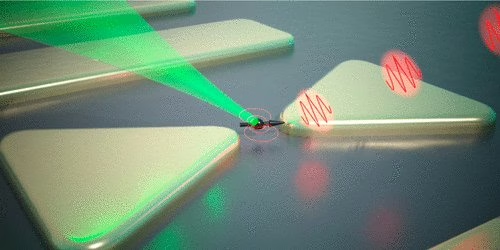
Perspective by Femius Koenderink most read in ACS Photonics in 2017
On January 2nd, ACS Photonics announced on Twitter that “Single-photon nanoantennas” is their most read publication in 2017. AMOLF group leader Femius Koenderink is the author of this review article.
Erik Garnett appointed professor of Nanoscale Photovoltaics at the UvA
Erik Garnett has been named professor by special appointment of Nanoscale Photovoltaics at the University of Amsterdam’s (UvA) Faculty of Science. The chair was established on behalf of the Foundation for the Promotion of Atomic and Molecular Physics. Garnett will continue working at AMOLF as group leader of the Nanoscale Solar Cells group.
Kristina Ganzinger appointed at AMOLF as WISE tenure track group leader
NWO has awarded three talented female scientists a WISE grant. Dr Kristina Ganzinger has received an appointment at the Netherlands Institute for the Physics of Functional Complex Matter AMOLF, Dr Larissa Juschkin at the Advanced Research Centre for Nanolithography ARCNL, and Dr Aurora Simionescu at the Netherlands Institute for Space Research SRON. With the WISE program, NWO wants to increase the percentage of female researchers at its institutes.
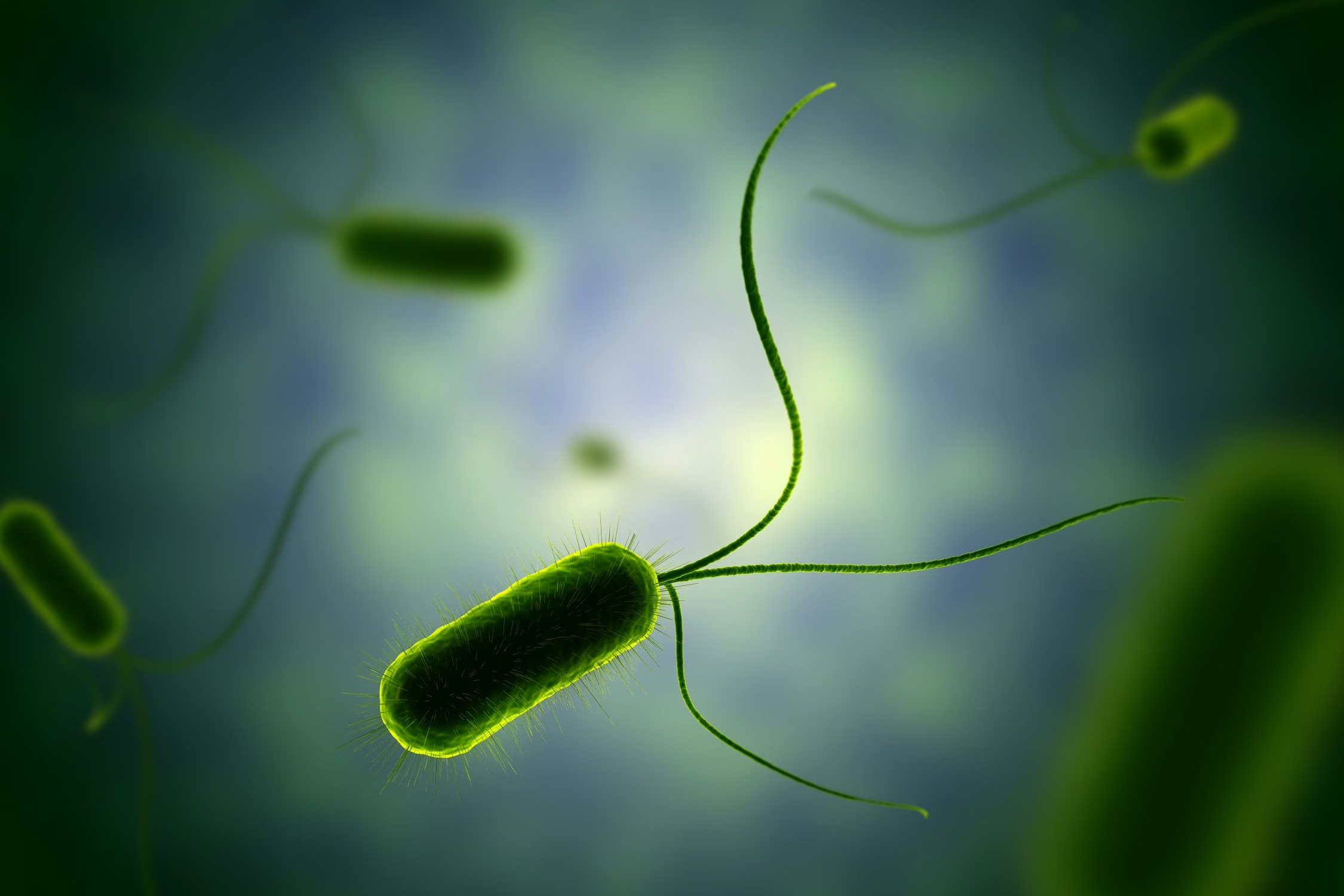
Personality and mood swings in bacteria
Bacteria can control where they go using a signaling network of protein molecules. Scientists at AMOLF have developed a microscopy method that allows them to see how individual bacteria use this network to make decisions.They discovered that bacteria are surprisingly diverse in personality and mood. The team publishes its findings in the scientific journal eLife on December 12, 2017.
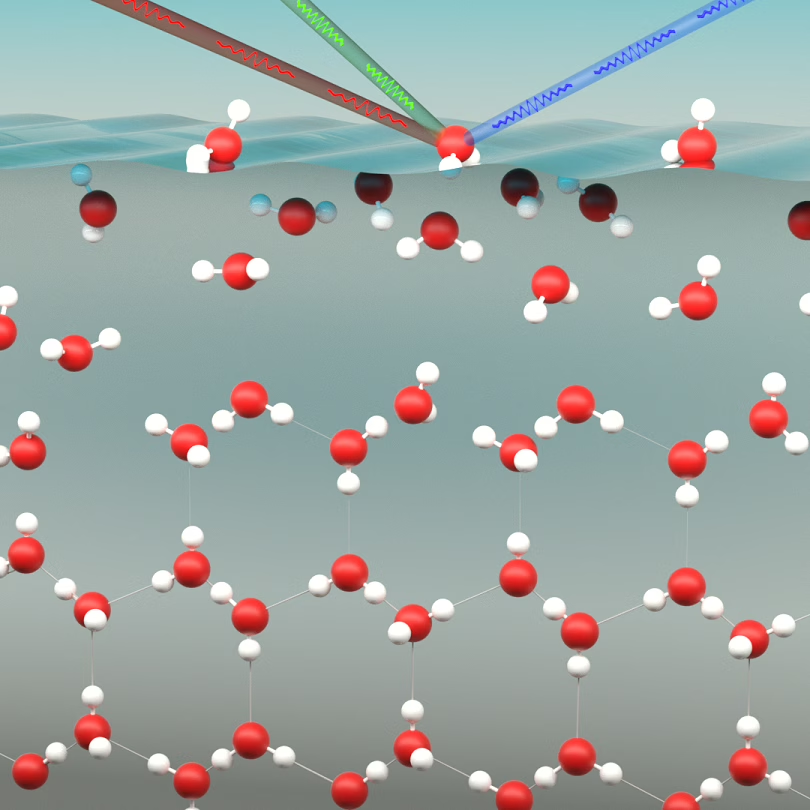
Ice skating on water, even when it is really cold
The outermost layer of ice behaves like liquid water, even at a temperature of –30°C. Physicists at AMOLF have irrefutably demonstrated this using a modern surface-sensitive measuring technique. At lower temperatures, however, the layer of water becomes increasingly thin. The researchers report their findings on 27 November in the journal Angewandte Chemie.
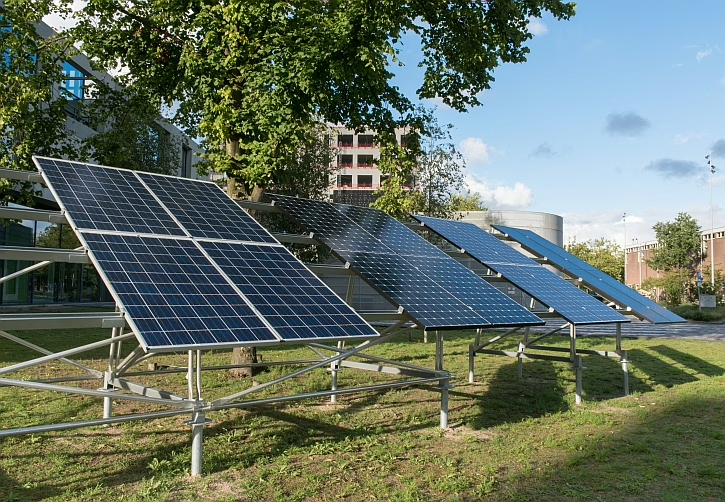
Nature Energy highlights three terminal configuration publication
On November 9th the journal Nature Energy highlighted a Nano Letters publication of the Nanoscale Solar Cells group in which they present a new type of tandem solar cell: the three terminal configuration. In the highlight with the ominous title ‘Dawn of the three-legged beast’, the author Elsa Couderc explains the purpose of introducing a third configuration, in addition to the two existing ones. She also touches on the design of the new device and its accomplishments, such as reaching an efficiency of up to 32,9%.
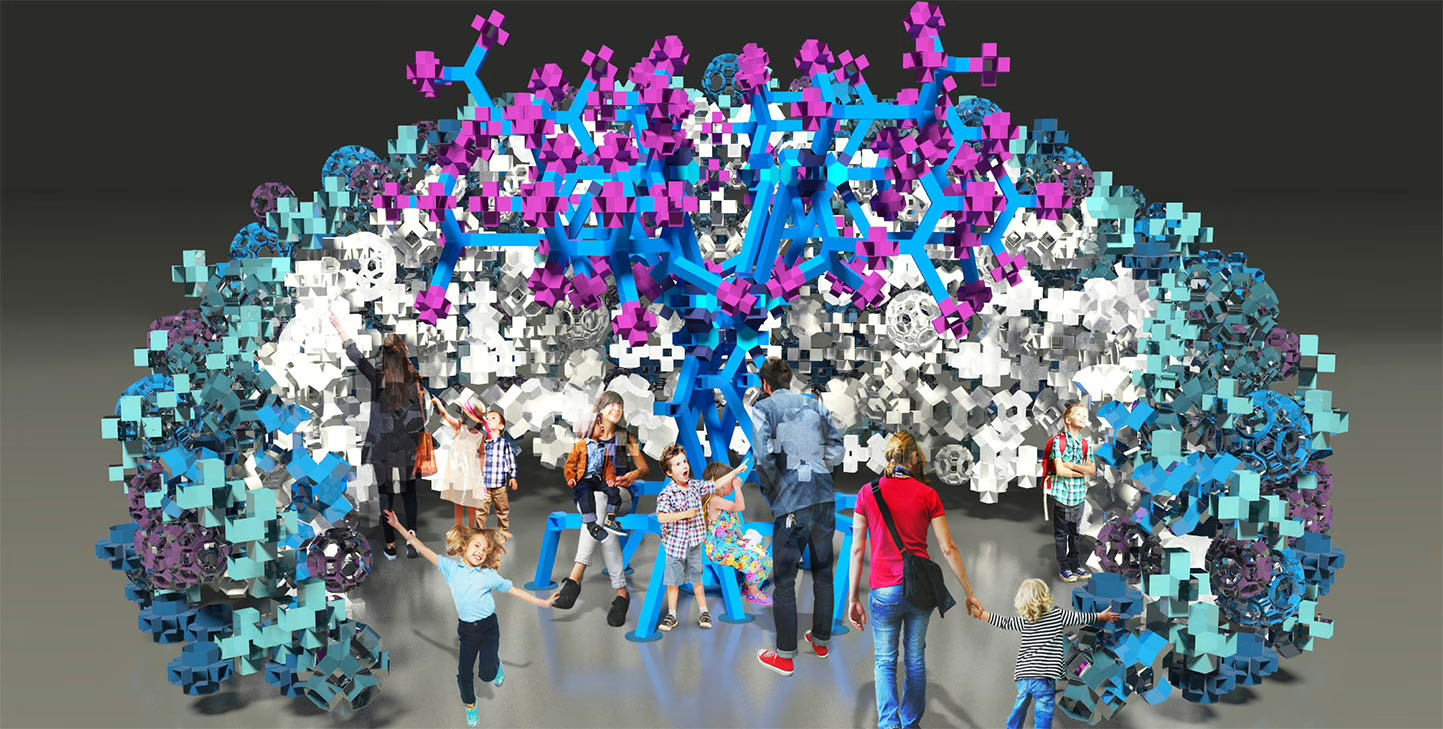
Overvelde connects Science & Art
On October 25th at the Cinekid Festival in Amsterdam, AMOLF scientific group leader Bas Overvelde received a grant to build an interactive art installation. It is one of three original media artworks that will be produced following the “Supernatural: stories of worlds to come” international call for projects (les voyages de capitaine future). The installation is called “The Edge of Chaos” and is designed by the Soft Robotic Matter Group (Amsterdam). Bas Overvelde and designers Vasilija Abramovic, Ruari Glynn from the Interactive Lab are stoked about the news and are gearing up to start building the structure. Upon completion, the art installation will go on tour in Europe (Paris, Amsterdam, Namur) to be exhibited by all four organizers of the competition: Cinekid, la Gaîté Lyrique, KIKK and WoeLab.

Dick Stufkens Prize 2017 awarded to Sven Askes
The Dick Stufkens Prize 2017 for the best PhD thesis of the Holland Research School of Molecular Chemistry (HRSMC) is awarded to AMOLF postdoc Sven Askes. In his thesis ‘Upconverting Nanovesicles for the Activation of Ruthenium Anti-Cancer Prodrugs with Red Light’, Askes describes a clever combination of materials and techniques for a new approach in photochemical cancer therapy. The jury was impressed by the quality, the originality and the interdisciplinary character of Sven Askes’s PhD thesis and expects that the work will have considerable impact on future development of photochemical cancer therapy.