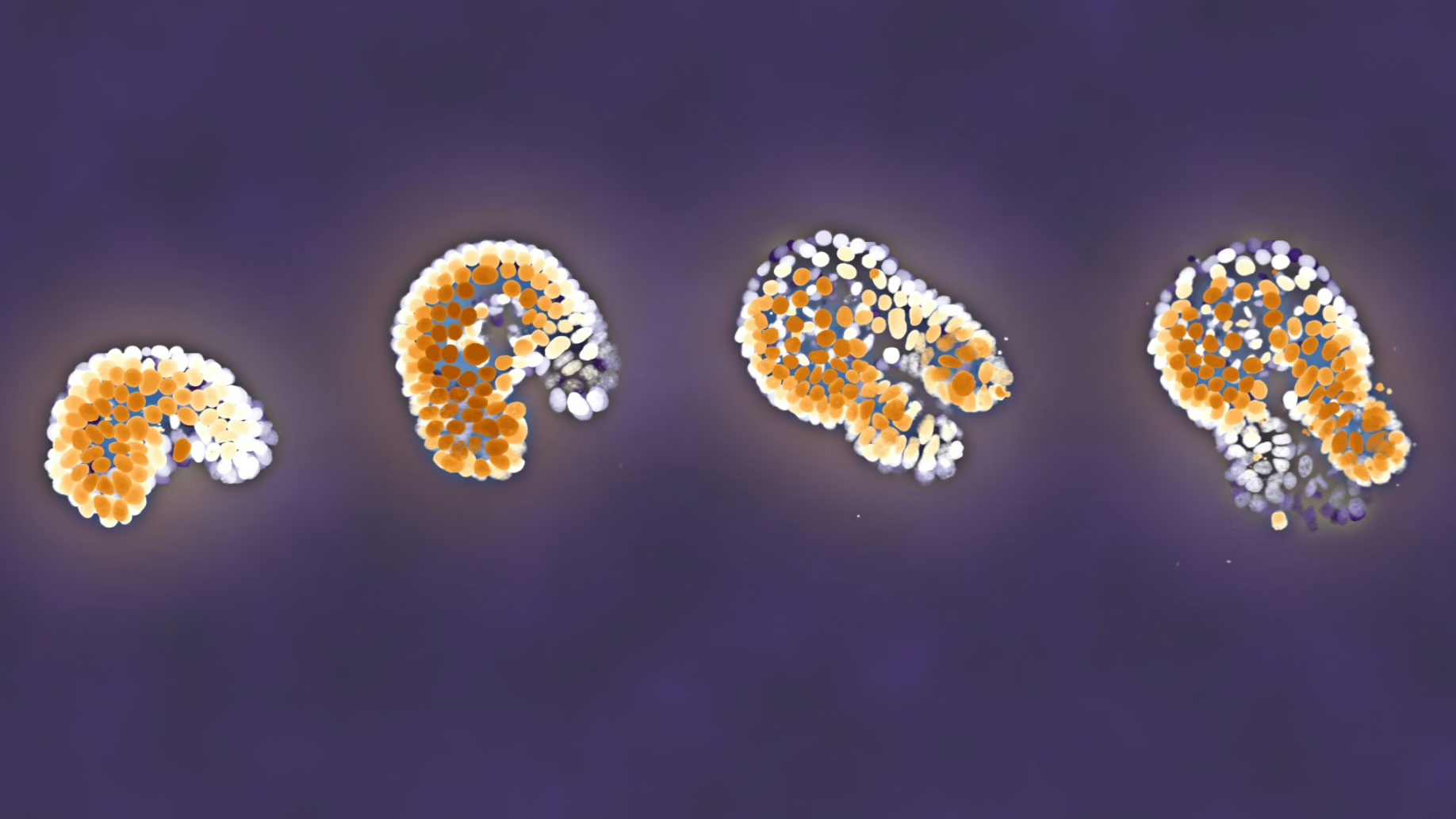
Cells experience many different types of stress, such as starvation or stress caused by too much salt or too high a temperature. Insulin signals respond to such stress signals by sending the protein DAF-16 into the cell nucleus where it activates the stress-specific genes to protect the worm from stress.
Morse code
But how does DAF-16 know for which type of stress it should activate the genes? By coincidence, the researchers from Jeroen van Zon’s Quantitative Developmental Biology group found the answer to this question. Guest researcher Maria Olmedo (University of Sevilla) brought a C. elegans worm where DAF-16 was made fluorescent, which allowed the researchers to track protein movement into and out of the cell nucleus. Together with former AMOLF PhD student Olga Filina, she noticed how DAF-16 moved into the nucleus of all body cells simultaneously. Also, the researchers noticed that the duration and frequency of these movements together formed a rhythm, with each type of stress having its own unique rhythm.
Starvation led to a regular rhythm (oscillations) and salt stress to more random pulses, the frequency of which rose as the amount of salt increased. Like people using morse code as a communication tool, cells seem to use these rhythms to pass on information about the type and amount of stress to which the worm is exposed.
All cells simultaneously
With these insights of former colleagues in mind, AMOLF PhD student Burak Demirbas (currently University of Amsterdam) decided to run some final experiments. It turned out to become the most important discovery of his doctoral research work: the rhythm in which DAF-16 moves into and out of the cell nucleus determines whether or not the worm grows.
Burak: “Looking through the microscope, I started measuring the size of C. elegans larvae and that’s when I saw that as soon as DAF-16 moves into the nucleus, the larva stops growing, and as soon as the protein has left the nucleus, it starts growing again.” This relationship between DAF-16 rhythm and body growth probably also explains why all body cells maintain a similar rhythm; only in this way the worm can ensure that all its cells stop growing or resume growth at the same time, thus maintaining correct body properties.
The human body
DAF-16 also plays an important role in the human body, but under a different name: FOXO. As in worms, the protein – together with insulin signals – regulates processes such as the growth of tissues and organs, and it also protects against different kinds of stress. In addition, it is closely involved in diseases such as diabetes, cancer and in ageing. Group leader Jeroen van Zon says: “The worm C. elegans is very similar to more complex organisms, like human beings. I notice that all the questions we ask are also relevant for a better understanding of the human body.”
Learn more
If you have questions about this research, please contact Jeroen van Zon (j.v.zon@amolf.nl).
This paper was published in Nature Communications: Body-wide synchronization of insulin-signaling dependent DAF-16/FOXO nuclear translocation pulses correlated with C. elegans growth