
In vivo biophysics of sentient behavior
Group leader: Prof. dr. Tom Shimizu
We are searching for motivated students and postdocs to join our group
-
Jobs & internships
Jobs & Internship opportunities in the Physics of Behavior Group …
Read more about
About us
Living organisms sense and respond to their environment by an intricate web of molecular and cellular interactions. Inasmuch as their designs are dictated by the problems they solve, such networks that underlie biological behavior can be considered algorithms derived by natural selection.
We aim to link the temporal dynamics of sensing and behavior to the constraints imposed by the implementing machinery and evolutionary selection. Can naturally evolved systems be understood in the same language that engineers use to design machines for a specific purpose? Or are there fundamental design principles peculiar to the continuously evolving biological world? How plastic are these biological designs over evolutionary time scales? Microbes and other small organisms can serve as an excellent vehicle for probing such questions, as the time scales involved in signaling, behavior and evolution are all amenable to laboratory experiments.
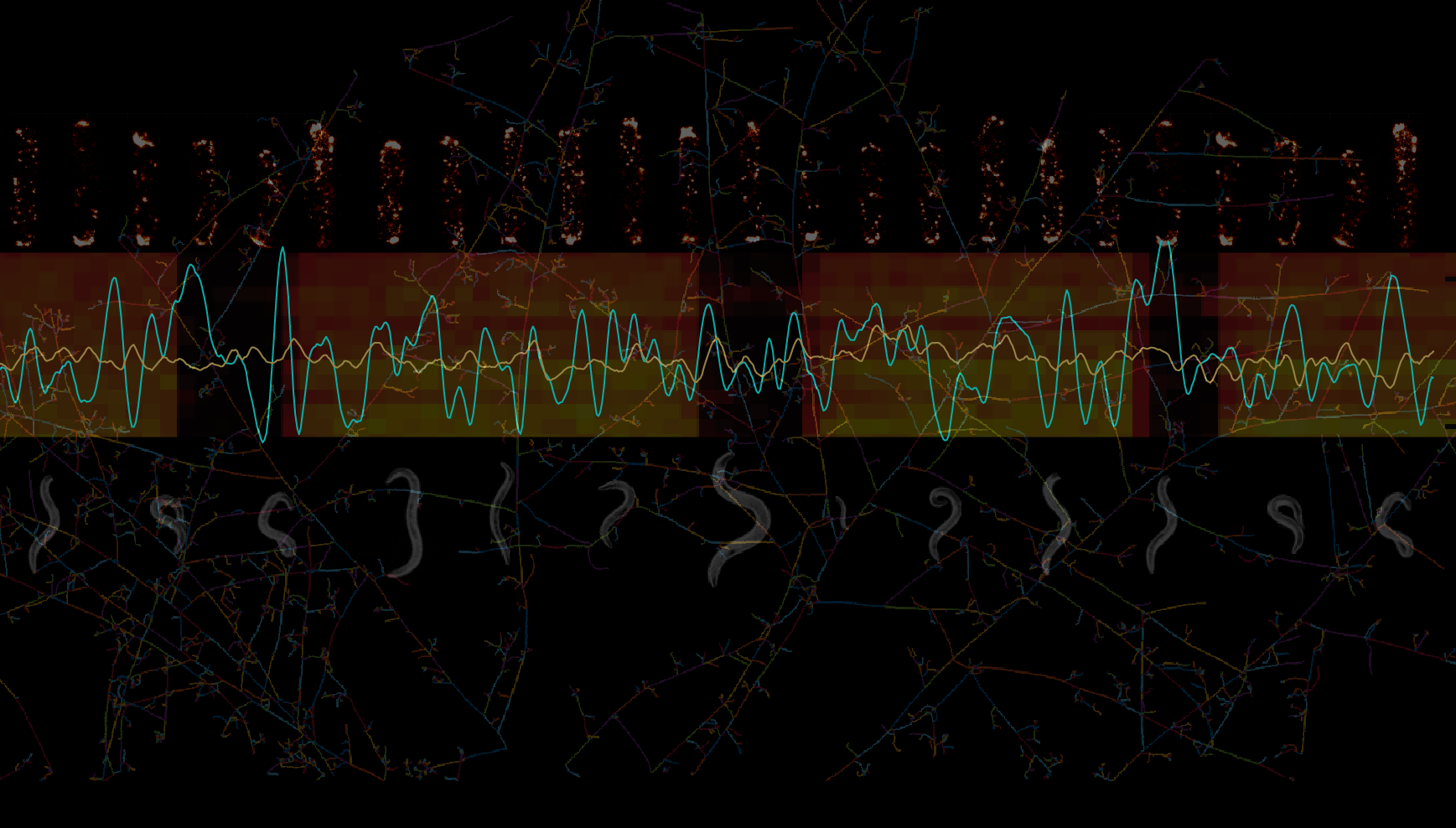
We combine experiments with theoretical modeling and data analysis methods to tackle these problems. We develop a variety of imaging techniques across a range of scales, from single molecules to cells to whole organisms. We study the design of behavior and its underlying control physiology, and in turn its implementation at the cellular and molecular level. We make extensive use of fluorescence, microfluidics, genetic engineering, robotics, and at times DNA/RNA sequencing to dissect behavior, and methods and ideas from statistical physics to make sense of the dynamics we observe across scales.


